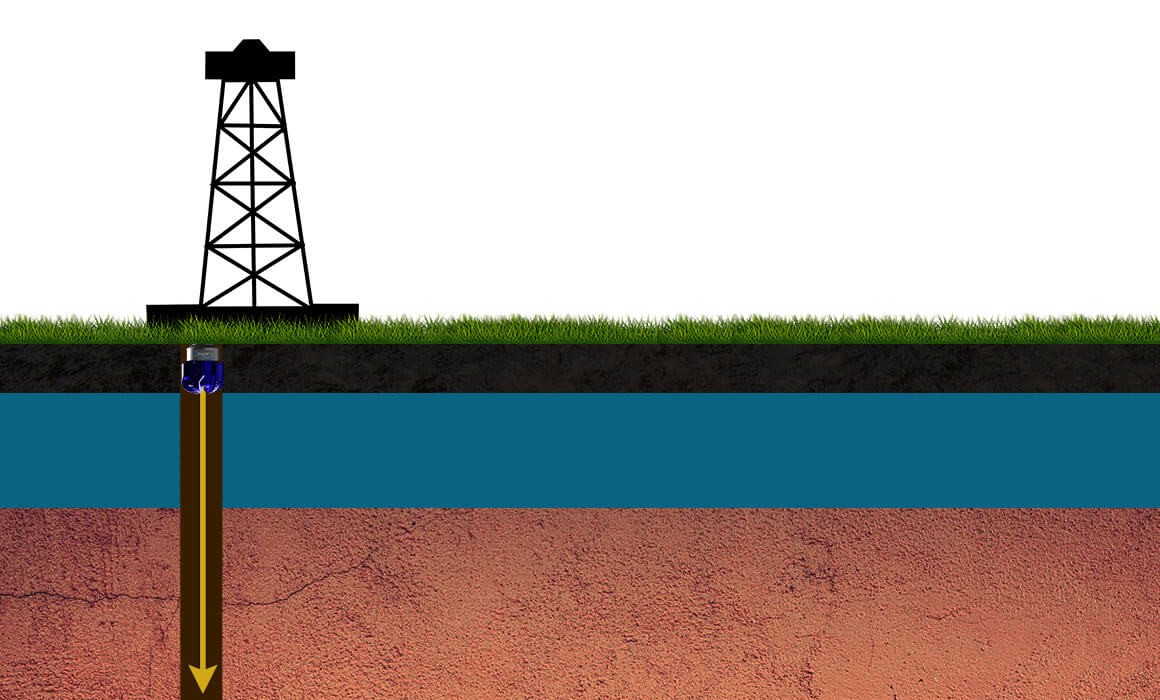
Well Stimulation is a technique oil companies use to maximize the volume of oil and gas that can be retrieved from a drilled well.

What Are the Most Common Methods of Well Stimulation?

The most common methods of well stimulation are:


  • acid injection
  • hydraulic fracturing, and
  • explosives.


All forms of well stimulation help to open channels in the formation, so that oil and gas can flow to the wellbore more easily.

Acid Injection Well Stimulation

Acid injection is the oldest form of well stimulation from more than 100 years ago.


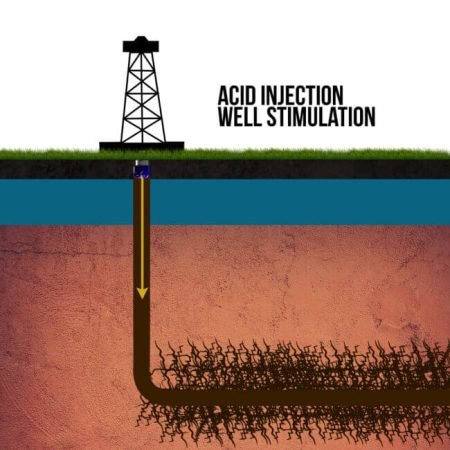
Acid stimulation is where an acid is pumped down hole under pressure.


The acid dissolves minerals and calcareous deposits that would otherwise impede hydrocarbon flow.


The porosity within the formation is enlarged, allowing for increased fluid passage.


The most common type of acid used is hydrochloric acid (HCl).


Careful consideration must be taken to not damage the steel casing and well equipment when using acid. After the acid job is complete, it is removed from the well by a process called backflush.
Well-Stimulation-Acid

Hydraulic Fracturing Well Stimulation

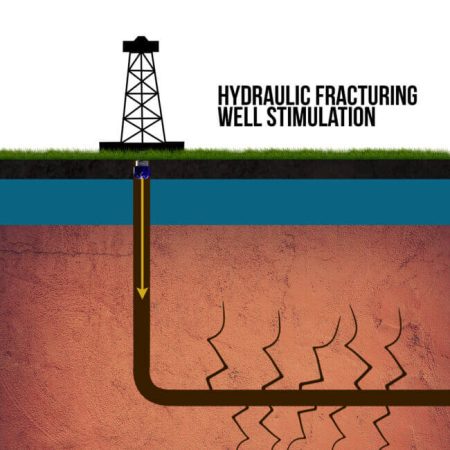
Hydraulic fracturing well stimulation requires a fluid to be pumped down hole at extremely high pressures.


The fluid pressure forces the producing formation to fracture, crack, and break.


These fractures allow hydrocarbons to easily pass to the wellbore.


When a well is “fracked”, and the hydraulic fluid pressure is reduced, the cracks tend to close and return to their original state.


To maximize oil production a proppant or sand is pumped down hole while the well is being fracked.


The proppant makes its way into these tiny fractures within the formation.


As the pressure is reduced, the fractures are held open by the proppant, which is now within the fractures.


The hydrocarbons now have a much easier path to the wellbore.


Some research shows that production can increase 30 times when hydraulic fracturing has been used.


Retired wells can be fracked to revitalize and increase production, giving them a second life before they are decommissioned.
Well-Stimulation-Hydraulic

Explosive Well Stimulation

Explosive well stimulation requires the use of chemical explosives.


This is commonly known as well shooting.


Explosives detonated downhole create an energized pressure wave which travels through the fluid in the well.


The fluid moves into and breaks up the formation.


Explosive is the simplest form but has been proven the be the least accurate and effective of all methods.


It can also cause localized damage to the well if not executed properly.

It’s Time to Run Canadian, Eh?

Trendon Bit Service can save you time and money through,


  • Faster ROP,
  • Bits that last, and
  • Our experience on your team.


Call us at: +1 403 536 2770,


Email us at: sales@trendon.ca, to save time and money on your project.


Trendon Bit Service


Performance. Durability. Control.
When it comes to improving drilling performance, saving the operator time is important. Time equals money and every minute, and every hour saved helps you succeed.


There are other metrics to consider when judging a successful drill and how to improve drilling performance.


Drill bits have a unit cost, whether it’s a purchase price or rental rate.


The larger cost to the operator is the time it takes to drill a well. As the operator is paying for the rig, the services, products, and people to be on location to take care of the entire drilling operation.


Drill bits that can drill faster and longer are what operators are continually seeking. An hour saved is big money.


The formations being drilled, depths of drilling wells, the size of the hole and locations where these wells are drilled are ever changing.


Therefore, not one bit type will serve as an all-encompassing solution.


Drill bit providers are continually improving their designs with the latest diamond cutter technology, tweaking how many cutters are utilized, where the cutters are placed in a bit and improving the matrix body material that holds the cutters in place.


Different bit profiles and gage lengths will also help the bit’s ability to be steered when drilling a directional well. All these available characteristics of a drill bit are considered when selecting the best drill bit for the job.


The speed at which a drill bit can drill at is highly sought after, along with the ability to steer the drill.

Improving Drilling Performance: Sliding vs. Rotating

When directional steering is required, a drill bit must “slide” to build angle or change direction in a well when using a conventional mud motor.


The mud motor will have a small bend between 1.5-2.5 degrees.


When the well direction needs to change the drill pipe will be held static whilst the mud motor will continue to power the drill bit. The small bend in the motor will force the drill bit to drill to one side of the hole and change direction.


In lateral and vertical sections, the drill bit can creep off trajectory, due to formation push or tendencies induced by the bottom hole assembly (BHA).


The drill bit will need to be corrected via a correction slide to stay within target.


The rate of penetration (ROP) during sliding is usually 50% or less than “rotating” (when the drill pipe is rotating, and the motor is powering the bit).


Drilling whilst the drill pipe is rotating is the most efficient drilling mode. Weight from the drill string can be easily and consistently be transferred to the drill bit. Rotating the drill string is powered from the surface by a rotary table or top drive.


If we can reduce the amount of sliding a drill bit has to do, the overall average rate of penetration (ROP) will improve. This saves time and money.


This is an important consideration that gets overlooked.

Improving Drilling Performance: Worked Example

If a drill bit can drill 10 m/hr rotating and 4 m/hr while sliding, the sliding ROP is 40% of rotating. If that drill bit slides 100 m out of 1000 m lateral the entire lateral would take 115 hours to drill with an average ROP of 8.7 m/hr.


Breaking this down by hours, sliding would take 25 hours and rotating would take 90 hours. 10% of the well drilled by sliding would take 28% of the total time drill the lateral. That is time wasted to drill the well.


That is why reducing sliding saves money.

Improving Drilling Performance: Drill Bit Design

In a build section, a drill bit can be designed to build angle as best as possible, whilst having a low reactive torque. This will help to quickly achieve the required build.


Note that coupling a properly designed build bit with an adequate directional bottom hole assembly (BHA) is paramount to success. Drilling a slow build section or using a drill bit that is difficult to control directionally will cost the operator time. Chances are the operator will not use that drill bit again.


In a horizontal section, a drill bit may tend to drift off target.


This can be costly as many corrections slides will be needed to stay within the payzone for the duration of the horizontal section.


A drill bit designed to track straight or resist walking will reduce the total number slides. Less sliding means a faster overall rate of penetration (ROP) and therefore less time spent drilling. Sometimes using a very aggressive drill bit may not actually equate to a faster section drilled.


Aggressive drill bits tend to not be as stable and more likely to wonder. Engineers spend a lot of time using field data and computer simulation software to design drill bits specific to the needs of an operator.


Designing aggressive drill bits that are stable is key.


The total meters slid can be adjusted by either building angle smoothly and rapidly as possible or tracking straight to reduce wandering or walking.


The operator will then benefit from a faster overall rate of penetration (ROP). A well drilled faster means money saved on not having to pay for hourly/daily services.


Saving hours of drilling can mean saving over tens of thousands of dollars which is big savings anyway you look at it.

It’s Time to Run Canadian, Eh?

Trendon Bit Service can save you time and money through,


  • Faster ROP,
  • Bits that last, and
  • Our experience on your team.


Call us at: +1 403 536 2770,


Email us at: sales@trendon.ca, to save time and money on your project.


Trendon Bit Service


Performance. Durability. Control.